2016년 8월 9일 화요일

Week 3 - Pipilotti Rist

Week 3

Elisabeth Charlotte "Pipilotti" Rist was born June 21, 1962, she is a visual artist who works with video, film, and moving images which are often displayed as projections.


Ever Is Over All envelops viewers in two slow-motion projections on adjacent walls. In one a roving camera focuses on red flowers in a field of lush vegetation. The spellbinding lull this imagery creates harmonizes with the projection to its left, which features a woman in sparkling ruby slippers promenading down a car-lined street. The fluidity of both scenes is disrupted when the woman violently smashes a row of car windshields with the long stemmed flower she carries. As the vandal gains momentum with each gleeful strike of her wand, an approaching police officer smiles in approval, introducing comic tension into this whimsical and anarchistic scene.


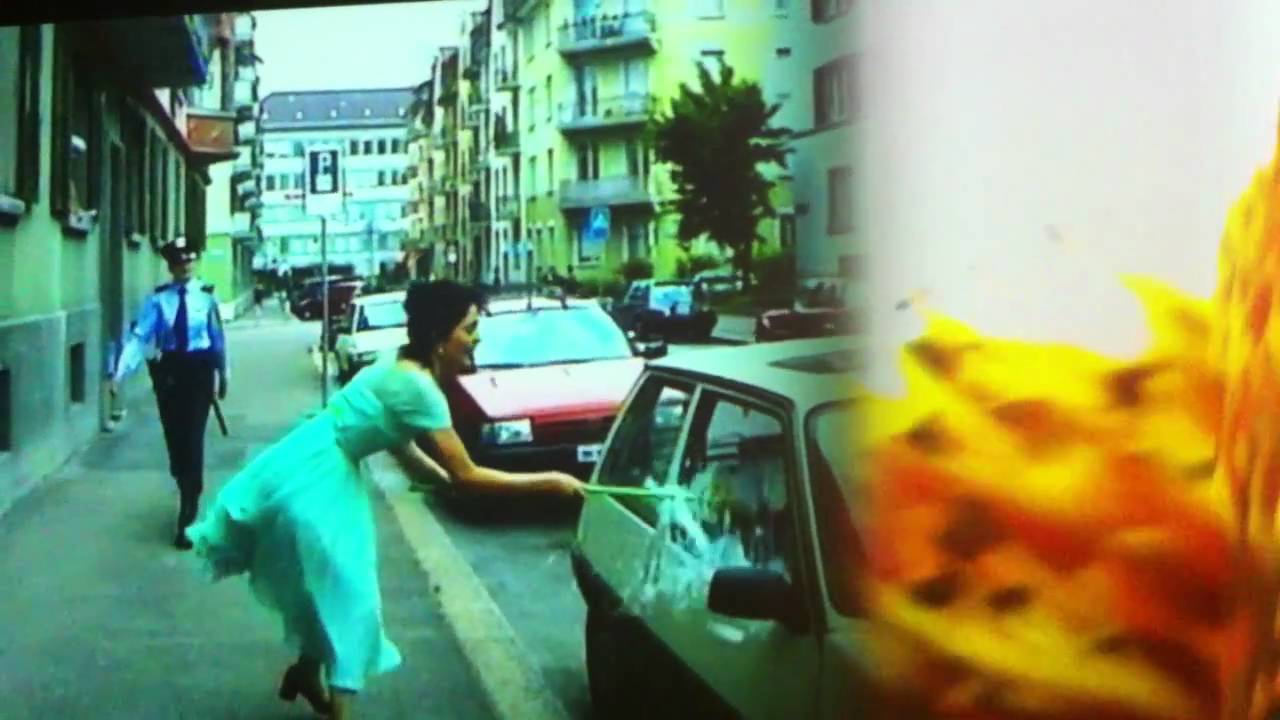
Bibliography

References:

Info about Pipilotti Rist:

Images:

Ever Is Over All envelops:


http://65.media.tumblr.com/c648f4d0b23a01c1896b1a2d6687c58a/tumblr_o66em3HTqB1tqy4aho1_1280.jpg

2016년 7월 30일 토요일

Week 2 - Nam June Paik

Week 2

Week 2nd we studied through about Nam June Paik. He was born in July 20, 1932 – January 29, 2006. He was a Korean American artist. He worked with a variety of media and is considered to be the founder of video art. He is credited with an early usage (1974) of the term "electronic super highway" in application to telecommunication.

Portrait of Nam June Paik-by Lim Young-kyun-1981.jpg

Electronic Super Highway
To design this monumental map of the United States, the artist Nam June Paik arranged 336 televisions on a scaffold and overlaid it with almost 600 feet of neon. Fifty DVD players send multimedia simultaneously to screens populating each state.
In 1974, artist Nam June Paik submitted a report to the Art Program of the Rockefeller Foundation, one of the first organizations to support artists working with new media, including television and video. Entitled “Media Planning for the Post Industrial Society, The 21st Century is now only 26 years away”, the report argued that media technologies would become increasingly prevalent in American society, and should be used to address pressing social problems, such as racial segregation, the modernization of the economy, and environmental pollution. Presciently, Paik’s report forecasted the emergence of what he called a “broadband communication network” or “electronic super highway” comprising not only television and video, but also “audio cassettes, telex, data pooling, continental satellites, micro-fiches, private microwaves and eventually, fiber optics on laser frequencies.” By the 1990s, Paik’s concept of an information “superhighway” had become associated with a new “world wide web” of electronic communication then emerging just as he had predicted.